


Ping G440 Irons Review 2026: Steel, Graphite & High Launch Tested
This review covers the full Ping G440 irons range in depth, breaking down what each model delivers, who each option is best suited to, and how the lineup stacks up against the closest competition.
Whether you're moving on from an older set of irons, weighing up Ping against alternative brands, or heading into a fitting and trying to nail down the right shaft and set configuration, this Ping G440 irons review gives you the information you need to make a well-informed decision.
Ping G440 Irons Summary
| Key Specs | Available in steel or graphite shaft · High Launch graphite option · Set configurations: 4-PW, 5-PW, 6-PW · Standalone SW available · Perimeter weighting for forgiveness · Wide sole design for improved turf interaction | |
|---|---|---|
| Highlights | Strong forgiveness across the set from long irons to wedges · Consistent gapping and predictable ball flight · High Launch variant engineered for slower swingers · Clean, confidence-inspiring look at address | |
| Best For | Mid-to-high handicap golfers seeking a forgiving, consistent iron set that works across a wide range of swing speeds and ability levels | |
| Our Rating |
A set of irons is one of the most personal purchases in golf. Unlike drivers, where the gap between good and average contact is softened by a large face and maximum MOI numbers, irons reward quality ball striking across fourteen different swing lengths throughout a round.
They need to perform consistently from the long end of the bag right down to approach play, delivering reliable carry distances, predictable gapping and the kind of turf interaction that holds greens on the courses most UK golfers play week in, week out.
The Ping G440 irons make a clear argument: forgiveness and feel don't have to be mutually exclusive. Built around a wide-sole design, perimeter weighting and a choice of three shaft configurations to match the range of swing speeds and launch requirements across the golfing population, they're engineered for the golfer who plays regularly, wants consistency from their irons, and needs a set that covers the full bag from the 4-iron through to the pitching wedge.

Which Ping G440 Iron Is Right for You?
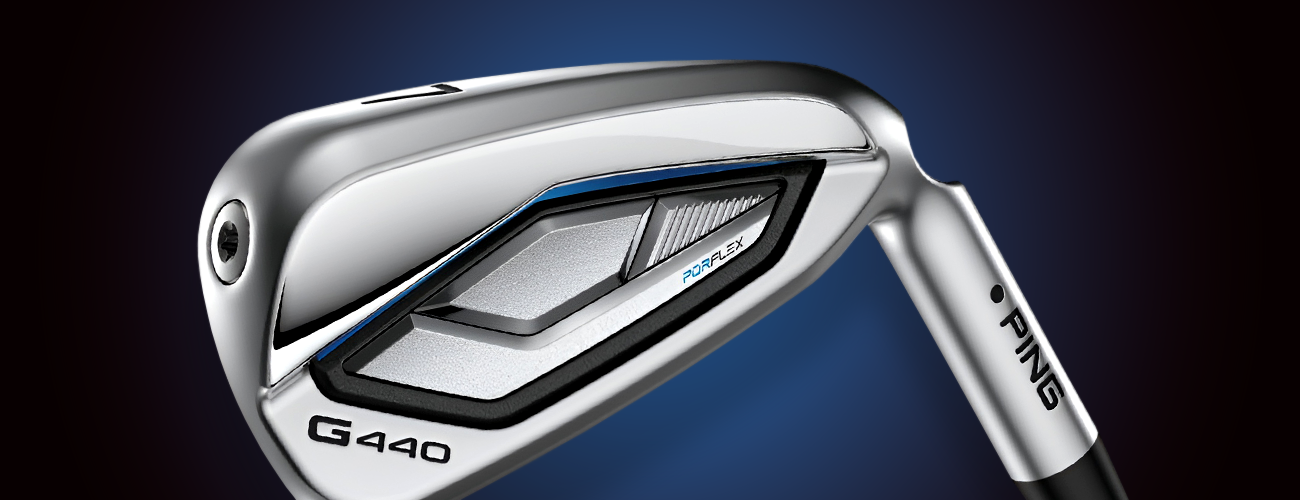
The G440 iron range is straightforward by design. Three options cover the full spread of golfer profiles, differentiated primarily by shaft material and launch characteristics. The choice between them is largely determined by swing speed, how easily you get the ball airborne, and whether steel or graphite is the better fit for your game.
All three variants share the same iron head. The differences are entirely in the shaft configuration, which means the forgiveness, turf interaction and overall shaping are consistent across the range. What changes is the way the shaft complements your swing to optimise launch and carry.
| Variant | Shaft | Launch | Swing Speed | Best Suited To |
|---|---|---|---|---|
| G440 Irons Steel Shaft | Steel | Mid | 85mph+ (6-iron) | Golfers who prefer the traditional feel and feedback of steel; mid-to-low handicappers and stronger ball strikers |
| G440 Irons Graphite Shaft | Graphite | Mid–High | 70–90mph (6-iron) | Golfers who want lighter shafts for more clubhead speed; slower swingers, seniors and those with joint sensitivities |
| G440 High Launch Irons Graphite Shaft | Graphite (High Launch) | High | Under 75mph (6-iron) | Slower swingers who struggle to achieve adequate height and carry; seniors needing elevated launch without sacrificing forgiveness |
Not sure which option best fits your game? Book a custom fitting appointment to confirm the right shaft and configuration for your swing.
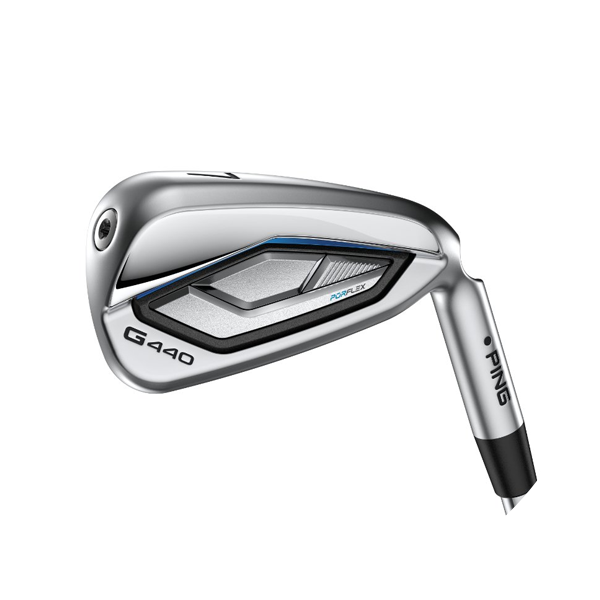
Ping G440 Irons Steel Shaft
The steel-shafted G440 is the standard-bearer of the range and the natural starting point for the majority of golfers considering this set. Steel shafts offer a slightly heavier, more stable feel through impact and provide a degree of feedback that graphite can sometimes dampen. For golfers who have played steel all their golfing lives, the transition to graphite can feel unfamiliar, and the steel G440 removes that variable from the equation.
This variant is the right choice for golfers who generate enough clubhead speed to get the ball airborne consistently with a mid-launching iron. It suits a broad mid-handicap to single-figure range and will suit anyone who values the traditional feel and weight of steel through impact.
Who this variant suits: Golfers with a 6-iron swing speed of approximately 85mph or above who prefer steel's feel and feedback, and who don't struggle to achieve adequate launch and carry with mid-lofted irons.
Who should consider the alternatives: Golfers who find their longer irons fall too low, or who carry any kind of joint complaint that makes heavier shafts uncomfortable over an eighteen-hole round, should consider the graphite or High Launch graphite options instead.
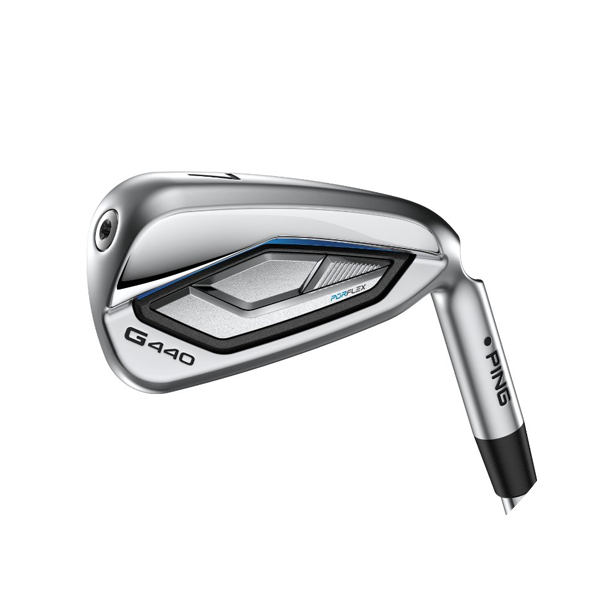
Ping G440 Irons Graphite Shaft
The graphite-shafted G440 uses a lighter shaft profile to help you generate more clubhead speed with the same physical effort. For golfers who sit in the moderate swing speed range, graphite can produce a meaningful improvement in carry distance and launch angle compared with a comparable steel option, without requiring any change in technique.
It's also worth noting that lighter shafts reduce the cumulative physical load on joints across a full round. If you tend to notice fatigue or discomfort through their wrists, elbows or shoulders over the back nine, graphite is a practical solution that doesn't compromise performance.
Who this variant suits: Golfers with 6-iron swing speeds in the 70–90mph range, seniors, players who struggle with joint stiffness over a round, or anyone who finds that heavier steel shafts reduce their clubhead speed and carry by the time they reach the longer irons.
Who should consider the alternatives: Golfers who swing at 90mph or above with a 6-iron and already generate adequate launch may not notice a meaningful difference over steel, and the steel option's additional feedback could be preferable. Very slow swingers who also struggle to achieve adequate height should move directly to the High Launch option.
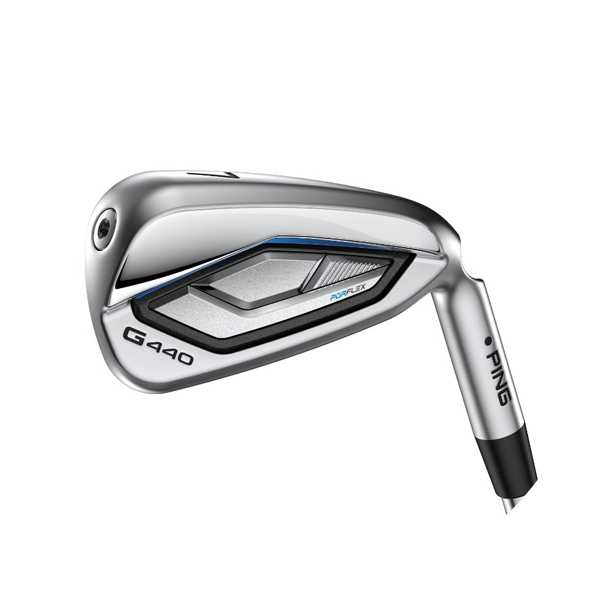
Ping G440 High Launch Irons Graphite Shaft
The High Launch variant uses the same iron head as the standard graphite option, but pairs it with a specifically engineered high-launch graphite shaft profile. It's designed to help golfers with slower swing speeds, typically those swinging a 6-iron at below 75mph, achieve the kind of launch angles and descent angles that allow them to hold greens and carry hazards that a flatter, lower-launching iron simply cannot.
For its target audience, this isn't a marginal upgrade. If you're the kind of golfer who has spent years watching long irons fall short and run through the backs of greens, the High Launch configuration can be genuinely transformative in terms of scoring ability.
Who this variant suits: Senior golfers and slower swingers (6-iron swing speed below 75mph) who consistently find their iron shots launching too low, falling short of target or failing to stop on greens. Also worth considering for golfers who have previously been fit into high-launch shafts in other iron sets.
Who should consider the alternatives: Golfers swinging above 80mph with a 6-iron should test the standard graphite option first; the High Launch shaft at that speed may produce excessive height and reduced distance control on shorter irons.
Which G440 Iron Variant Should You Try First?
If you're unsure, start with the steel-shafted option if your swing speed allows it and you have a preference for traditional feel. If you're a senior golfer, carry any joint sensitivity, or know your 6-iron swing speed is below 85mph, begin with the graphite. If you consistently struggle to get the ball up and carry the distances you need, the High Launch graphite is the logical starting point. A fitting session with launch monitor data will sharpen the decision considerably.

Ping G440 Irons Key Technologies & Design
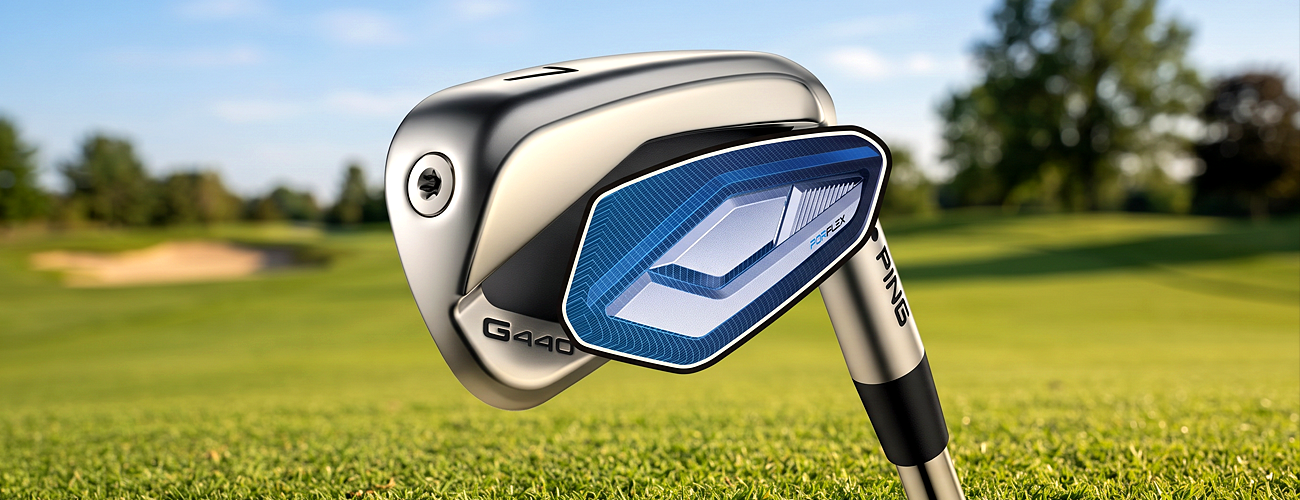
Ping's approach to iron design prioritises reliable engineering and real-world performance over surface-level features that don't actually add to your game. That means the G440 irons are built on a set of well-established technologies that work together to improve consistency, forgiveness and turf interaction across the full set.
Perimeter Weighting
Maximising the moment of inertia on off-centre strikes
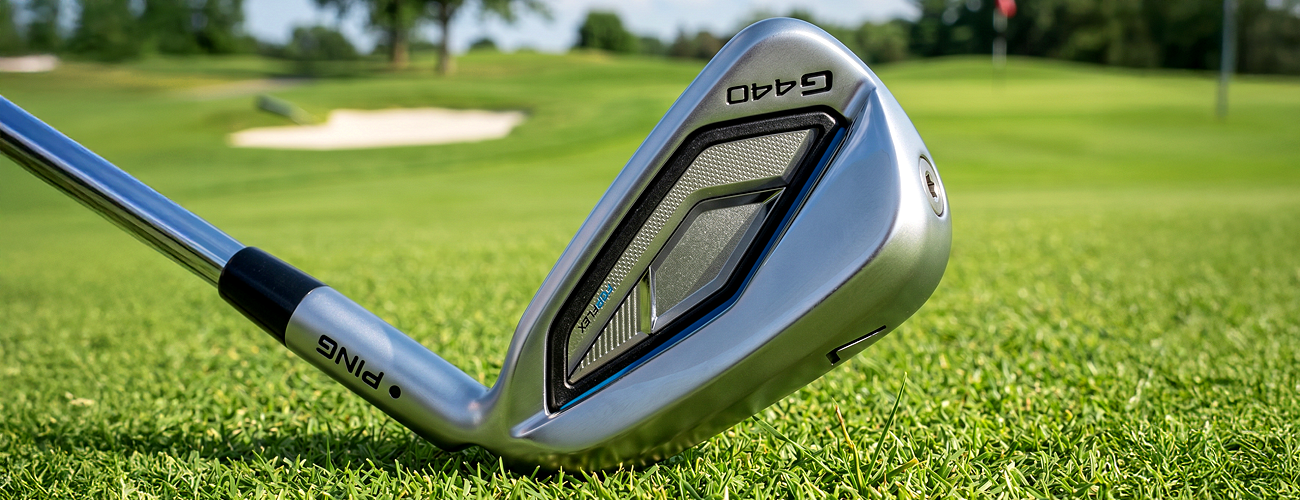
The G440 irons use perimeter weighting to distribute mass around the outer edges of the clubhead, increasing the iron's resistance to twisting when contact isn't perfectly centred.
This is the foundation of the G440's forgiveness. By keeping weight at the heel and toe rather than concentrated behind the sweet spot alone, the head remains more stable through impact on the strikes that miss slightly high, low or towards either edge. Across a full round for most golfers, that actually describes a significant proportion of iron shots.
The result is that the gap between your best iron shot and your average one narrows. Ball speed holds up better on off-centre contact, and directional dispersion is tighter than a less forgiving blade or cavity-back iron would produce on the same miss patterns.
Wide Sole Design
Improved turf interaction for consistent contact
The G440 irons feature a wider sole than many comparable clubs, which lowers the leading edge and reduces the likelihood of the club digging into turf on impact. This design decision has a direct and practical benefit for UK golfers playing on soft, often wet parkland fairways: the iron glides through the turf more smoothly, reducing fat shots and allowing a cleaner, more consistent ball-first strike.
The sole width is graduated through the set; the longer irons carry more sole width to assist with the naturally shallower angle of attack that most golfers produce on those clubs, while the shorter irons are slightly narrower to preserve the feel and feedback needed for precision approach play.
Face Construction and Slot Technology
Maintaining ball speed across the face
Ping uses a flexible face design on the G440 irons, incorporating a slot or cavity structure that allows the face to flex more through impact, particularly on low-face strikes.
In practical terms, this means irons caught slightly low on the face (a common miss pattern with longer irons) retain more ball speed and launch at a higher angle than a less sophisticated face design would allow. The drop-off in carry on low-face contact is reduced, helping to preserve consistent gapping through the set.
Offset
Promoting a square face at impact
The G440 irons carry a moderate amount of offset, meaning the leading edge of the face sits slightly behind the hosel. This gives you a fraction more time to return the face to square through impact, which helps reduce the left-to-right shot shape that plagues many mid-to-high handicap golfers. It's a design feature that contributes to the G440's ease of use without making the club look overtly like a game-improvement iron at address.
Custom Colour Specification (CCS)
Fitting the lie angle to your swing
Like all Ping irons, the G440 is available across a range of colour-coded lie angle specifications through Ping's Custom Colour Specification system. A fitting will determine which lie angle matches your swing plane and address position, ensuring the iron sits correctly at impact and promotes a straighter, more consistent ball flight.
This is a feature worth using, because even a single degree of lie angle error across the set can produce systemic directional misses that no amount of practice will fully resolve.

Building Your G440 Iron Set
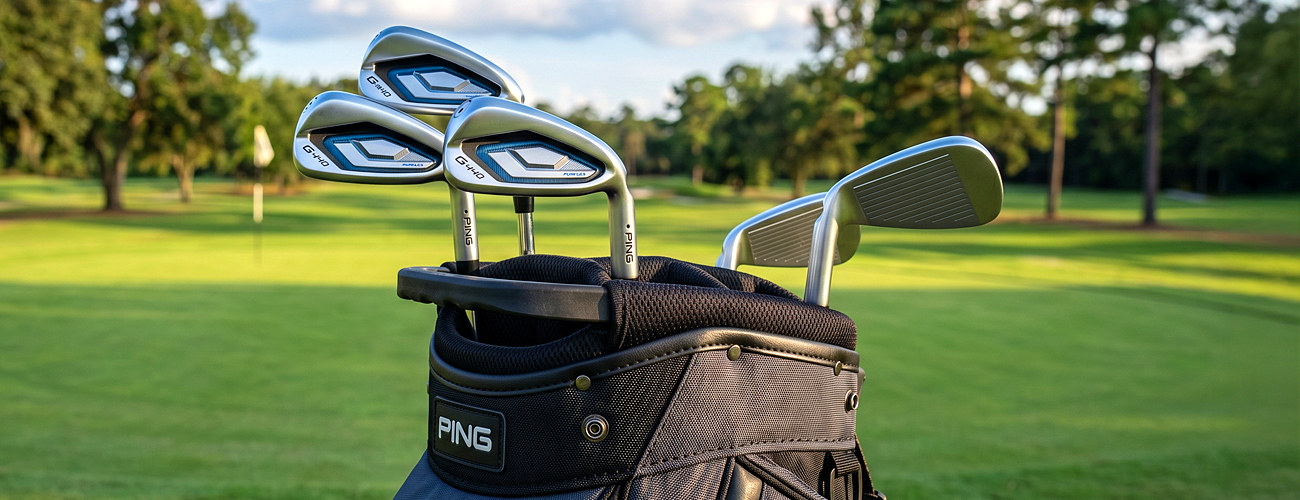
One of the decisions that often gets less attention than shaft choice or head selection is the composition of the set itself. With the G440 irons, Ping offers three standard configurations:
- 6-PW (5 irons)
- 5-PW (6 irons)
- 4-PW (7 irons)
A standalone sand wedge (SW) is also available to extend the set, giving you an additional scoring club matched to the G440 family.
Which Set Configuration Is Right for You?
The answer depends primarily on your ability level, your swing speed through the longer irons, and whether you already carry hybrid or fairway wood options at the top of your bag.
6-PW is the most appropriate starting configuration for golfers who find long irons difficult to hit consistently. By beginning the set at the 6-iron, you sacrifice the 4- and 5-iron but gain a configuration that's playable across almost every shot you'll face with an iron in hand. Most golfers who choose this option replace the missing long irons with hybrids, which are easier to hit from a wider range of lies and angles of attack.
5-PW offers a useful middle ground. It gives you the 5-iron for those longer par-3s and tight approaches where a hybrid might feel like too much club, while still keeping the set manageable and consistent. It suits golfers with moderate swing speeds who can reasonably expect to make clean contact with a 5-iron on most strikes.
4-PW is the most demanding configuration. A 4-iron requires a clean, descending strike and enough swing speed to compress the ball adequately through impact. For golfers who consistently hit long irons well, a full 4-PW set gives complete coverage in the irons and can simplify decision-making on approach shots where club selection is critical. It suits lower-handicap golfers and those with faster swing speeds who prefer the precision of a matched iron set throughout.
Should You Consider Adding Some G440 Wedges?
The G440 irons have very strong lofts, which has become commonplace in the market. The Pitching wedge is 42 degrees, and the sand iron is 56 degrees, so it is wise to consider filling the gap with the G440 matching wedges. The Utility wedge is 47 degrees, and there is also a gap wedge available at 52.
Should your set make-up allow it, the full range gives you perfect gapping. For golfers who already have specialist wedges in the bag, or those who may be limited by the 14-club rule, it may be better to take just one and accept a gap.
Replacing Long Irons with Hybrids
For a large proportion of mid-to-high handicap golfers, replacing the 4-iron or even the 5-iron with a hybrid is one of the most effective equipment decisions available. Hybrids are designed to be easier to launch from a wider range of lies, including rough, semi-rough and thin fairway lies, and their lower, deeper centre of gravity makes them considerably more forgiving on partial and off-centre contact than a long iron.
The practical approach is to assess your long iron contact in a fitting environment. If your 4-iron or 5-iron produces inconsistent launch, variable carry and a high miss rate, replacing either or both with a hybrid is likely to lower your scores more quickly than persisting with irons that don't suit your swing.
Starting the G440 set at the 5-iron or 6-iron and pairing it with a Ping G440 hybrid or a Ping G440 High Launch Hybrid (which share family DNA with the irons and gapping is straightforward to calibrate in a fitting) is a combination worth exploring if you haven't already.

Shaft Options & Recommendations
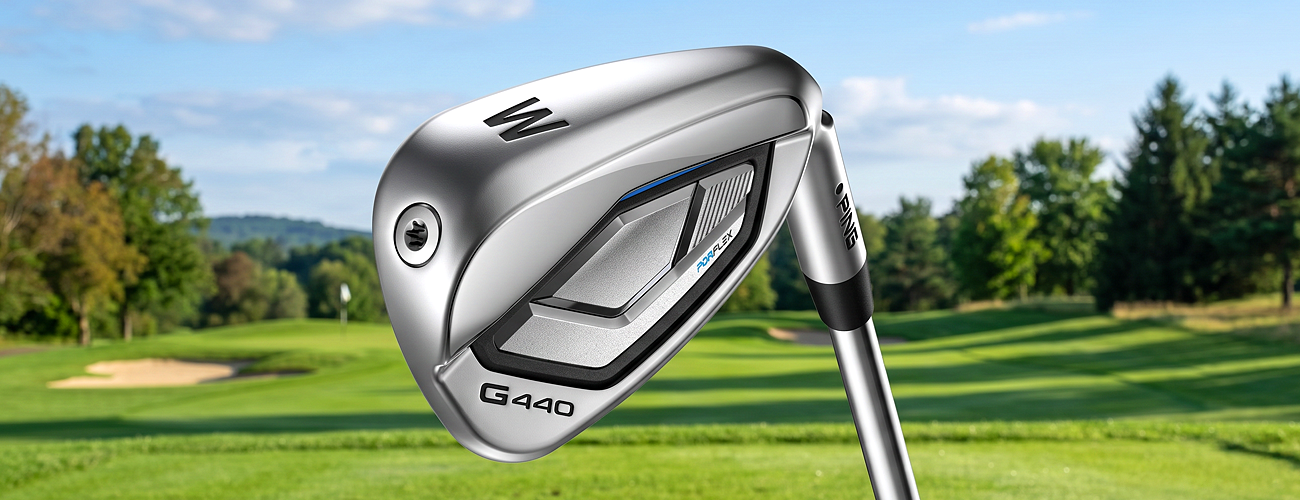
Shaft selection in irons is arguably even more consequential than in woods, because you're hitting ten or more different clubs through the set and the shaft's weight, flex profile and launch characteristics compound across every iron from the 4 through to the pitching wedge.
Steel Shaft Option
Steel shafts are heavier than graphite, typically in the 95–130g range depending on the specific shaft and flex chosen. They offer a more stable feel through the swing, slightly lower launch in most cases, and a level of feedback through impact that many golfers, particularly those with lower handicaps, find essential for shaping shots and reading contact quality.
For the G440 steel option, the stock shafts are matched to deliver a mid-launch profile suited to the iron head's design. Flex choices typically span Regular, Stiff and X-Stiff, covering the range of swing speeds that naturally suit steel. Golfers in the 85–100mph 6-iron swing speed range will generally find Regular or Stiff the right starting point; faster swingers should consider Stiff or X-Stiff to maintain control and prevent the shaft from influencing shot shape under pressure.
Graphite Shaft Option
Graphite shafts are lighter, typically 55–85g in an iron context. They allow you to generate more clubhead speed for a given level of physical effort. For golfers with slower swings, the additional speed translates directly into more carry. For seniors or golfers with joint issues, the lighter overall weight of the club reduces fatigue across a full round without compromising distance.
The standard graphite option for the G440 is aimed at golfers with 6-iron swing speeds in the 70–90mph range. Flex options typically include Ladies, Senior, Regular and Stiff, covering a wide spread of swing speeds within that bracket. A fitting will confirm the right flex for your specific tempo and transition characteristics, which matter more in irons than pure swing speed alone.
High Launch Graphite Shaft Option
The High Launch graphite configuration is specifically engineered to produce more elevation at impact (a higher launch angle and a steeper descent angle) than the standard graphite option. This matters most for golfers whose slower swing speeds mean they can't compress the iron enough to generate the ball flight needed to carry hazards or hold greens.
The distinction between standard graphite and High Launch graphite isn't simply about flex; the shaft profile and tip stiffness are different, designed to kick higher through the hitting zone. Although if you're considering the High Launch variant, it's usually worth having it confirmed through a fitting rather than self-selecting based on feel, because the wrong launch profile in either direction creates distance and gapping inconsistencies that are difficult to manage on the course.
Find the perfect iron setup to optimise your game: Book A Custom Fitting Appointment

How Do the Ping G440 Irons Perform?
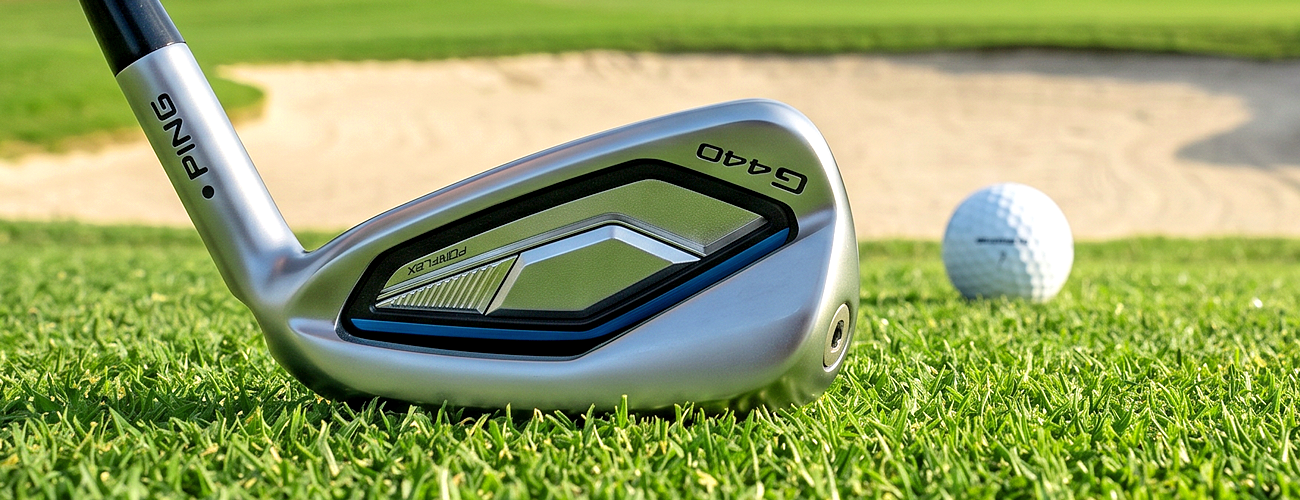
The shared iron head across all three G440 variants means the fundamental performance characteristics like forgiveness, turf interaction, and gapping consistency are consistent across the range. What changes is how the shaft influences launch angle, carry distance and feel through the hands. In testing, the G440 irons demonstrated the qualities you'd expect from a well-engineered game-improvement iron built on Ping's established design philosophy.
Testing Conditions
Performance observations in this section were gathered using a Foresight GCQuad launch monitor at an indoor UK test facility with a premium urethane-cover golf ball. Testers covering mid-handicap and senior profiles struck each variant across a range of swing speeds matched to the intended player profile for that configuration.
Where specific carry figures are referenced, they reflect multi-shot averages for each club and should be treated as representative rather than definitive. Your numbers will vary based on your own swing characteristics, ball choice and playing conditions.
Steel Shaft: Performance
The steel-shafted G440 delivers the consistent, mid-launching iron performance that suits the broadest range of club golfers. Through the mid-irons (6, 7, 8), the head-shaft combination produced reliable launch angles, predictable descent angles steep enough to hold UK parkland greens in soft winter conditions, and carry distances that held up well on strikes that missed the centre slightly.
Where the steel G440 particularly impressed in testing was in gapping consistency. The carry difference between clubs in the set was notably even, which matters enormously for golfers making distance-based club selections on approach shots. Poor gapping, which is often caused by mismatched shaft flex or inconsistent shaft behaviour through the set, is one of the most underappreciated contributors to high scores, and the G440 steel set behaves predictably from club to club.
The longer irons (4 and 5, where chosen) demand a clean, ball-first strike to perform at their best, as they do in any steel-shafted set. Golfers who don't compress the ball consistently should consider whether a hybrid replacement or a move to the graphite option is more appropriate.
Graphite Shaft: Performance
The graphite-shafted G440 produced noticeably higher launch angles and, as a result, steeper descent angles than the steel option when tested at equivalent swing speeds on the lower end of the range (approximately 75–85mph with a 6-iron). For golfers in that bracket, the additional launch translates into meaningful carry gains on the longer irons, with the 5- and 6-irons in particular producing the kind of peak height needed to stop the ball on firm surfaces.
The graphite option also softened the feel of impact subtly, which in a full round across eighteen holes reduces the physical load on the hands, forearms, and joints. For golfers who find steel irons leave their hands feeling heavy or fatigued by the back nine, the graphite G440 addresses that without compromising the forgiveness or gapping consistency the head itself provides.
High Launch Graphite: Performance
The High Launch graphite variant delivered the strongest performance improvements for its intended audience: slower swingers producing 6-iron swing speeds below approximately 75mph. In testing at those speeds, the High Launch shaft produced meaningfully higher peak heights than the standard graphite setup, which translated into steeper descent angles and improved ability to hold greens.
The practical benefit extended through the longer irons particularly. Shots with the 5-iron and, where used, the 4-iron, reached apex heights that allowed them to carry hazards and stop on target rather than running through. For the golfer profile this variant is designed around, that's the difference between a driver-and-short-iron course management strategy and one that opens up the whole set as a genuine scoring tool.
One note of caution: the High Launch shaft's elevated launch profile is less well-suited to the shorter irons in the set, where excessive height can reduce distance control. A fitting is particularly important with the High Launch option to ensure the shaft flex and weight are calibrated correctly across the full set.

Looks, Sound & Feel
Looks at Address
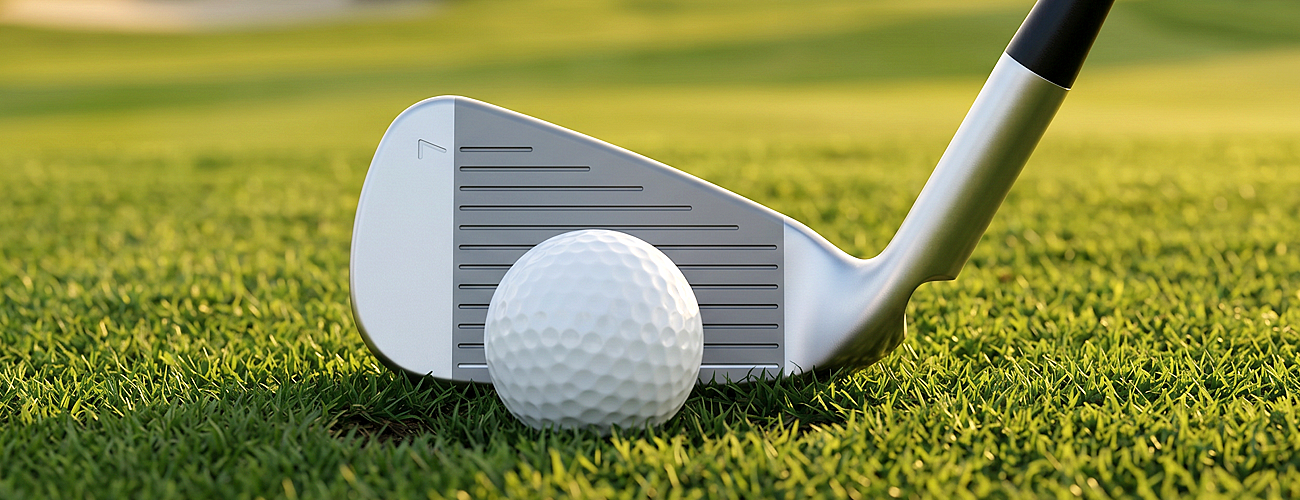
The G440 irons present a reassuring, mid-game-improvement profile at address. The topline is moderately thick; enough to project confidence without looking cumbersome. Meanwhile, the moderate offset helps frame the ball without giving the club an overtly 'game-improvement' appearance that might deter golfers who place value on aesthetics.
The sole width is visible behind the ball and contributes to a sense of stability and ease. It's not a thin-soled players' iron, and it doesn't try to be. What it does is sit squarely behind the ball and invite a straightforward, confident swing.
Through the set, the head shape scales appropriately. The longer irons carry slightly more sole depth and blade length, which reinforces the sense of forgiveness where it's needed most. The shorter irons are proportionally neater, making them look more precise and playable for approach and scoring shots. The finish is clean and understated, consistent with Ping's preference for functional aesthetics over showy design details.
Sound
The G440 irons produce a firm, clear impact sound. Centred strikes have a solid crack to them that confirms quality contact, while off-centre hits produce a slightly duller tone that gives immediate feedback without harsh vibration through the hands.
Compared with some softer-sounding competitors, the G440 is on the more assertive end of the spectrum. Golfers who prefer a muted, softened impact tone may find the G440 more direct in character than they're accustomed to. It's a genuine preference point worth paying attention to when testing.
Feel
Impact feel through the G440 irons is consistent and informative. Well-struck shots deliver a satisfying, stable sensation with clean energy transfer through the hands. Mishits are absorbed by the perimeter weighting and sole design without jarring, but they do register. You can clearly feel the difference between a centred strike and one that caught the heel or toe, which aids in diagnosing contact quality over time.
The steel and graphite variants differ in feel primarily through vibration and weight. The steel option transmits slightly more feedback and carries the satisfying weight that many golfers associate with quality iron play. The graphite option softens the overall sensation at impact and reduces the cumulative vibration load across a round. Neither is objectively better; it depends on what you're looking for from an iron, and both are worth testing back-to-back if you're undecided.

Ping G440 Irons vs Key Rivals
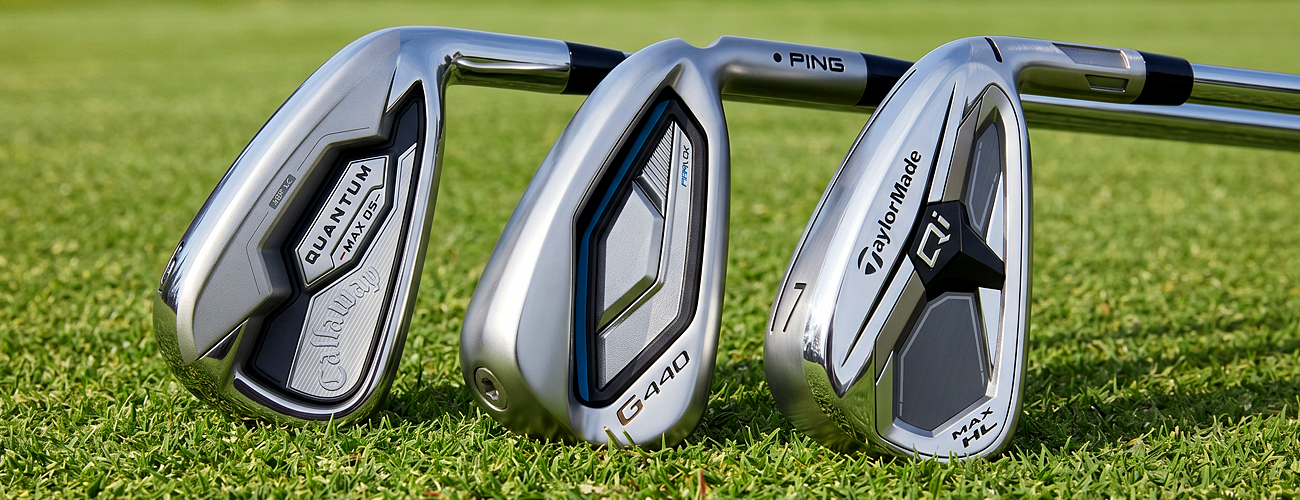
The G440 irons sit in a competitive category alongside strong alternatives from every major brand. Here's how they compare against the models you're most likely to be considering.
G440 Irons vs G430 Irons: Is It Worth Upgrading?
| If you value… | Choose |
|---|---|
| Latest face and sole technology improvements | Ping G440 Irons |
| Proven performance at a potentially lower price point | Ping G430 Irons |
The Ping G430 irons remain a strong option and a natural point of comparison for golfers considering the G440. The G440 builds on the G430's foundation with refinements to the face design for improved ball speed retention on off-centre strikes, and updates to sole geometry for better turf interaction in a wider range of conditions.
If you're already playing G430 irons and hitting them consistently, an immediate upgrade isn't essential. But if you're fitting from scratch or due a new set, the G440's improvements across face technology and turf interaction make it the stronger recommendation across all set configurations. The new High Launch variant also opens the range to a broader audience of slower-swinging golfers.
G440 Irons vs TaylorMade Qi MAX Irons
| If you value… | Choose |
|---|---|
| Consistent gapping and perimeter-weighted forgiveness | Ping G440 Irons |
| Maximum ball speed and progressive head construction through the set | Ping G440 Irons |
Irons in the TaylorMade Qi range use a progressive construction approach, varying the head design across the long, mid and short irons to chase maximum ball speed at the top end and precision at the bottom. The result is strong distance output through the longer clubs, with the shorter irons transitioning towards a more compact, feel-oriented profile. For golfers who want every section of the set individually optimised, the Qi MAX makes a persuasive case.
The G440 prioritises uniformity across the bag. The head shape, sole geometry and visual identity stay consistent from club to club, which many golfers find easier to trust in terms of setup routine, feel and flight expectations.
If you value a set that behaves predictably from the 4-iron to the pitching wedge without shifting character mid-bag, the G440 is the more cohesive choice. If outright distance through the long irons is the priority and you're comfortable with a set that changes personality as it moves through the bag, the Qi MAX is worth testing side by side.
G440 Irons vs Callaway Quantum Irons
| If you value… | Choose |
|---|---|
| Forgiveness-first design with a wider sole and Ping's lie-angle fitting system | Ping G440 Irons |
| AI-optimised face speed and a softer, more cushioned impact feel | Callaway Quantum Irons |
The Callaway Quantum irons lean heavily on AI-designed face technology to maximise ball speed across the hitting area, paired with a softer overall feel at impact that many golfers find immediately appealing. If you place a high premium on how an iron feels in the hands, particularly that cushioned, dampened sensation on well-struck shots, the Quantum is one of the more satisfying options in the category.
The G440 counters with Ping's wider sole geometry, which provides more consistent turf interaction on the softer lies common on UK parkland courses, and the Custom Colour Specification system that ensures lie angle is precisely matched to your swing rather than a stock setting.
For mid-to-high handicap golfers who want maximum forgiveness and a set that's properly fitted from the ground up, the G440 has the edge on configurability. Golfers who prioritise a softer feel and raw ball speed should test the Quantum back-to-back before deciding.
G440 Irons vs Cobra DS-Adapt Irons
| If you value… | Choose |
|---|---|
| Proven Ping build quality and fitting depth | Ping G440 Irons |
| Adaptive weighting and a bold, modern aesthetic | Cobra DS-Adapt Irons |
The Cobra DS-Adapt clubs are built around a moveable weight system that allows the centre of gravity to be shifted to suit different swing types and ball flight preferences. That adaptability gives you a degree of post-purchase tunability that few irons in this category can match, and the distance numbers are competitive throughout the set.
The G440 counters with greater depth in its shaft and set-configuration options, underpinned by Ping's colour-coded lie angle specification system that gives fitters more precise tools for matching the iron to each golfer's setup.
Where the DS-Adapt leans on adjustability after purchase, the G440 prioritises getting the fit right from the outset. In our opinion, it's an approach that tends to produce more consistent and repeatable results across a broad spread of golfer profiles.

Pros & Cons of the Ping G440 Irons
Pros
- Strong forgiveness across the full set through perimeter weighting and wide sole design
- Consistent gapping from the long irons through to the pitching wedge
- Three shaft configurations cover the full range of swing speeds and launch requirements
- High Launch graphite variant fills a genuine gap for slower swingers and seniors who struggle to achieve adequate carry
- Clean, confidence-inspiring appearance at address without looking overtly game-improvement
- Ping's Custom Colour Specification ensures the lie angle is fitted precisely to your swing
- Standalone SW available to complete the set with matched look and sole geometry
- Flexible set configurations (4-PW, 5-PW, 6-PW) allow tailoring to your existing bag
Cons
- Firmer impact character may not appeal to golfers who prefer a softer, more cushioned iron feel
- Wider sole and moderate offset mean the G440 is not aimed at better players seeking a workable, compact profile
- Long iron performance depends on adequate swing speed and clean contact; slower swingers may be better served by replacing the 4- or 5-iron with a hybrid
- The High Launch shaft requires careful fitting; self-selecting it without data risks launch and gapping inconsistencies through the set

Our Verdict: Ping G440 Irons
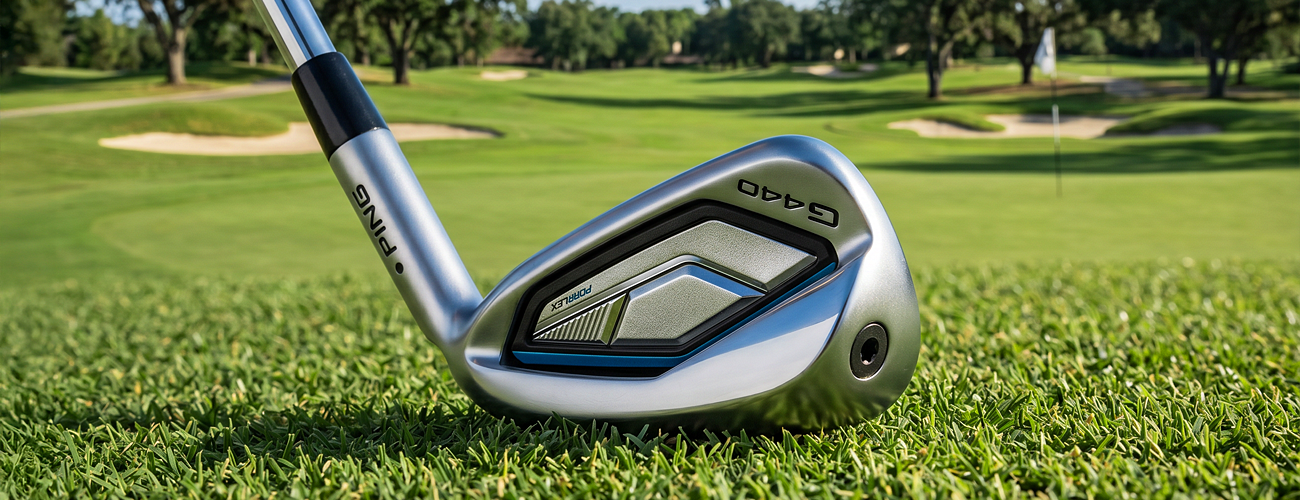
The G440 irons are Ping's most complete game-improvement iron offering. They don't attempt to be all things to all players, and that focus is a strength: the range is clearly structured around delivering consistency, forgiveness and appropriate launch for golfers across a wide range of swing speeds and ability levels, with a fitting system that ensures the right setup rather than a one-size-fits-all approach.
The standard steel option covers the broadest group of mid-handicap golfers who want reliable, steel-shafted performance. The graphite option opens the set to a meaningful additional cohort of slower swingers and seniors who need the lighter shaft weight to maximise clubhead speed. And the High Launch graphite variant addresses a specific but genuinely underserved group, golfers who have spent years struggling with long irons that launch too low to be useful, with a practical, well-engineered solution.
For UK golfers in particular, the G440's wide sole and consistent gapping across the set are well-suited to the variety of conditions encountered on parkland courses through autumn and winter, where turf interaction and predictable carry distances matter more than on firm summer fairways. The iron lands the ball steeply enough to hold greens in soft conditions, and the forgiveness across the set reduces the impact of inconsistent contact on days when grip conditions or cold-weather swings affect ball striking.
Where the G440 won't satisfy every golfer is at the premium end of the ability scale. If you're a better player seeking a thin topline, minimal offset, and precise workability, you may need to look at more compact options. And golfers who place high value on a soft, cushioned impact feel should test alternatives before committing.
For the majority of club golfers, however, the Ping G440 irons represent a well-made, consistently performing, properly fitted iron set that is likely to improve results on the course. Combined with the flexibility of the three set configurations and the option to replace longer irons with hybrids, it's one of the more complete iron propositions in the 2026 market.
Explore our full range of golf irons, or browse the complete Ping G440 range and book a custom fitting to find the right setup for your game.
Ping G440 Irons FAQs
What is the difference between the G440 steel and graphite iron options?
The steel and graphite G440 irons use the same iron head. The difference is entirely in the shaft. Steel shafts are heavier and transmit more feedback through impact, which suits golfers with faster swing speeds (typically 85mph or above with a 6-iron) who value feel and control. Graphite shafts are lighter, help generate more clubhead speed with less effort, and reduce vibration across a full round, making them better suited to slower swingers, seniors and golfers with joint sensitivities.
Who should choose the G440 High Launch graphite irons?
The High Launch variant is designed for golfers with slower swing speeds (typically a 6-iron swing speed below 75mph) who consistently find their irons launching too low to hold greens or carry hazards. The shaft profile is engineered to produce higher launch angles and steeper descent angles than the standard graphite setup. It's most effective when confirmed through a fitting, because the High Launch shaft at higher swing speeds can produce excessive height and reduce distance control through the shorter irons.
Which set configuration should I choose, 4-PW, 5-PW or 6-PW?
It depends on your ability level and how consistently you make clean contact with longer irons. The 6-PW configuration is the most accessible and is appropriate for most mid-to-high handicap golfers who find long irons difficult to hit consistently; the missing 4- and 5-irons can be replaced with hybrids. The 5-PW suits golfers who can reliably strike a 5-iron cleanly. The 4-PW is best reserved for golfers with the swing speed and ball-striking consistency to compress a 4-iron on most swings.
Should I replace my long irons with hybrids?
For many mid-to-high handicap golfers, yes. If you find your 4-iron or 5-iron produces inconsistent launch, variable carry or a high rate of thin and fat contact, replacing them with Ping G440 hybrids is likely to lower your scores. Hybrids are more forgiving from a wider range of lies and are considerably easier to launch for golfers who don't produce a steep, ball-first strike. A fitting will identify whether your long iron contact justifies keeping them in the bag or replacing them.
How does the Ping G440 compare to the G430 irons?
The G440 builds on the G430 with improvements to face technology for better ball speed retention on off-centre strikes, and refinements to sole geometry for improved turf interaction. The G440 also introduces the High Launch graphite variant, which didn't exist in the G430 lineup. If you're already playing the G430 and hitting it well, the upgrade isn't essential. But if you're fitting from scratch or due a new set, the G440 represents the stronger choice across all three shaft configurations.
Is the Ping G440 worth buying in 2026?
Yes, for the right golfer. If you're a mid-to-high handicap player seeking a well-forgiving, consistently gapping iron set that covers the full range of swing speeds through its three shaft options, the G440 irons are among the best-structured offerings in the 2026 iron market. The combination of perimeter weighting, wide sole design and Ping's Custom Colour Specification fitting system produces an iron that is meaningfully fitted rather than simply off-the-shelf. For golfers who prioritise consistency and on-course performance over workability or a compact aesthetic, the G440 irons represent an excellent choice.


